My research focuses on economic psychology, and how political cues influence marketplace behavior
Publications
-
Painful Prices: The Moral Harm Model of Price Fairness
Journal of Consumer Research | In collaboration with Margaret C. Campbell and Erin L. Percival Carter
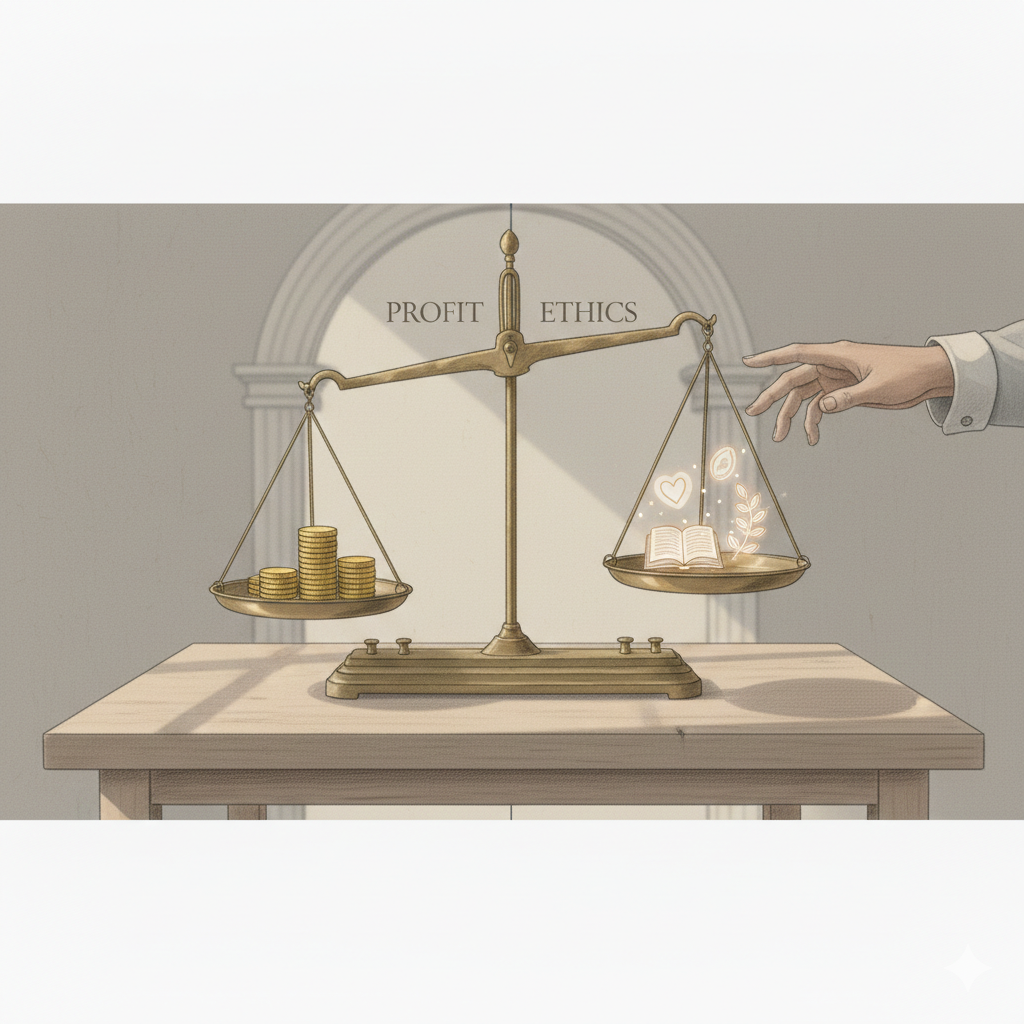
In this research, I explore why people often react so emotionally to price changes. My co-authors and I propose that we don’t just judge prices based on a mathematical calculation of value; instead, we use a "moral" sense of right and wrong. The core of our theory is that a price feels unfair when we believe it causes harm to someone. For example, people are much more likely to see a price as unfair if it targets vulnerable groups or involves essential items like medicine, even if the price itself hasn't changed. By shifting the focus to human impact and perceived harm, this work helps explain why certain pricing strategies can be seen as perfectly acceptable, while others spark significant public outrage.
-

A Glass Half Full of Money: Dispositional Optimism and Wealth Accumulation Across the Income Spectrum
Journal of Personality and Social Psychology | In collaboration with Joe J. Gladstone
In this research, I examine how our general outlook on the future—specifically dispositional optimism—shapes our financial health and ability to save. By analyzing data from over 140,000 individuals across multiple countries, my co-author and I found that being an optimist isn't just about feeling good; it's a significant predictor of actual wealth accumulation and higher savings rates over time. Interestingly, this "optimism advantage" is most powerful for those at lower income levels, where having a positive future outlook may provide the psychological resilience needed to prioritize long-term savings despite financial constraints. Ultimately, this work suggests that our personality traits play a crucial role in economic mobility and long-term financial security.
-
Party over product: People exaggerate the influence of political cues on others' consumption preferences
International Journal of Research in Marketing | In collaboration with Leaf Van Boven
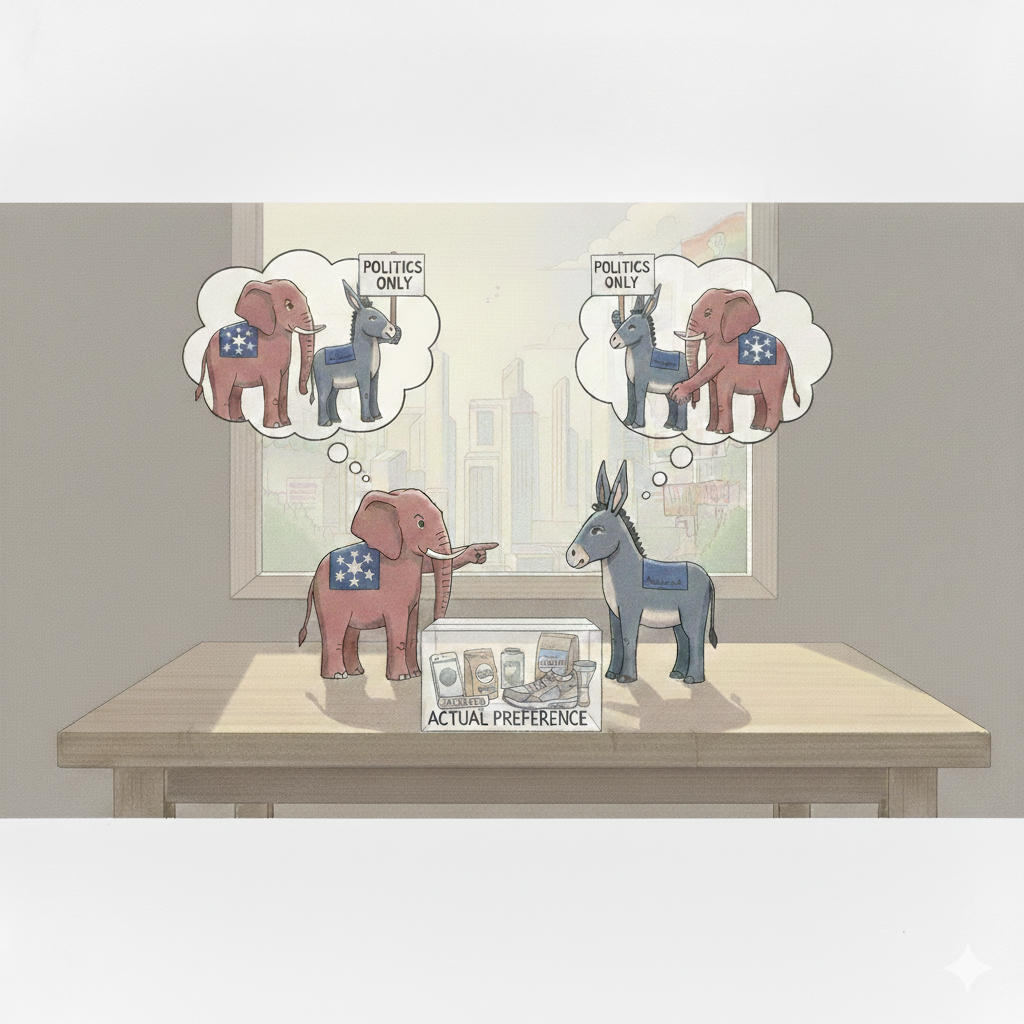
In this research, I examine how we perceive the impact of politics on other people's buying habits. My co-author and I found that consumers consistently overestimate how much political "cues"—like a brand's stance on social issues—actually drive the preferences of people on the opposite side of the political aisle. We call this "exaggerated preference polarization." While we might assume that someone from a different political party chooses products solely based on their ideology, our studies show that people generally care much more about the actual quality and features of a product than we give them credit for. By highlighting this mental gap, the work suggests that we are less divided in our consumer lives than we often imagine ourselves to be.
-

Beyond the bottom line: The influence of political ideology on preference for corporate sociopolitical activism
Journal of Business Research | In collaboration with Ermira Zifla
In this research, I investigate how our political leanings influence how we feel when companies take a stand on social or political issues. While many brands engage in "corporate sociopolitical activism" to connect with like-minded customers, my co-author and I discovered that this strategy doesn't land the same way with everyone. We found that liberals generally show a stronger preference for brands that align with their values compared to conservatives. This difference isn't just about the issues themselves; it is driven by deeper psychological factors, such as varying levels of trust in institutions and the different emotional responses sparked by a company’s activism. By looking beyond the bottom line, this work helps explain why value-driven marketing can be a powerful tool for some groups while being met with more skepticism by others.
-

Cut me some slack! How perceptions of financial slack influence pain of payment
Psychology & Marketing | In collaboration with Nicholas Reinholtz
In this research, which originated from my dissertation, I look at the "pain of paying"—that internal sting we feel when we part with our money. My co-author and I propose that this psychological discomfort isn't just about the price tag, but about our goal to maintain "financial slack," or the feeling of having enough of a buffer for the future. We found that the more we feel a purchase eats into that perceived safety net, the more painful the transaction becomes. By understanding how we mentally track this wiggle room, we can better predict when spending feels like a minor necessity versus a stressful loss.
-

In These Uncertain Times: Fake News Amplifies the Desires to Save and Spend in Response to COVID-19
Journal of the Association for Consumer Research | In collaboration with Nicholas Light and Lawrence E. Williams
In this research, I examine how "fake news" influenced our financial decisions during the COVID-19 pandemic. My co-authors and I found that exposure to fabricated information didn't just spread misinformation; it significantly amplified a sense of uncertainty. This uncertainty pushed people toward two conflicting behaviors: a desire to save more to protect their resources, but also a desire for "compensatory consumption"—spending money on things that help restore a sense of control or comfort. By looking at how people chose everything from restaurant meals to delivery services, this work highlights how a chaotic information environment can create deep psychological tension between the urge to splurge and the urge to squirrel money away.